

Pantai Batu Biru (Blue Stone Beach) is a stretch of black sand on the central southern coast of an Indonesian island called Flores. The island itself features beautiful volcanoes — some active and some dormant with powder-blue and aqua-green lakes in their calderas — the jumping off point to the famed Komodo Dragon island, the archeological site of a long extinct hominid Homo floresiensis, and of course numerous volcanic blank sand beaches. Blue Stone Beach is most definitely not a destination in and of itself but rather a place to stop off for 5 or 50 minutes whilst on your way eastward or westward along the coast. We did so last year.
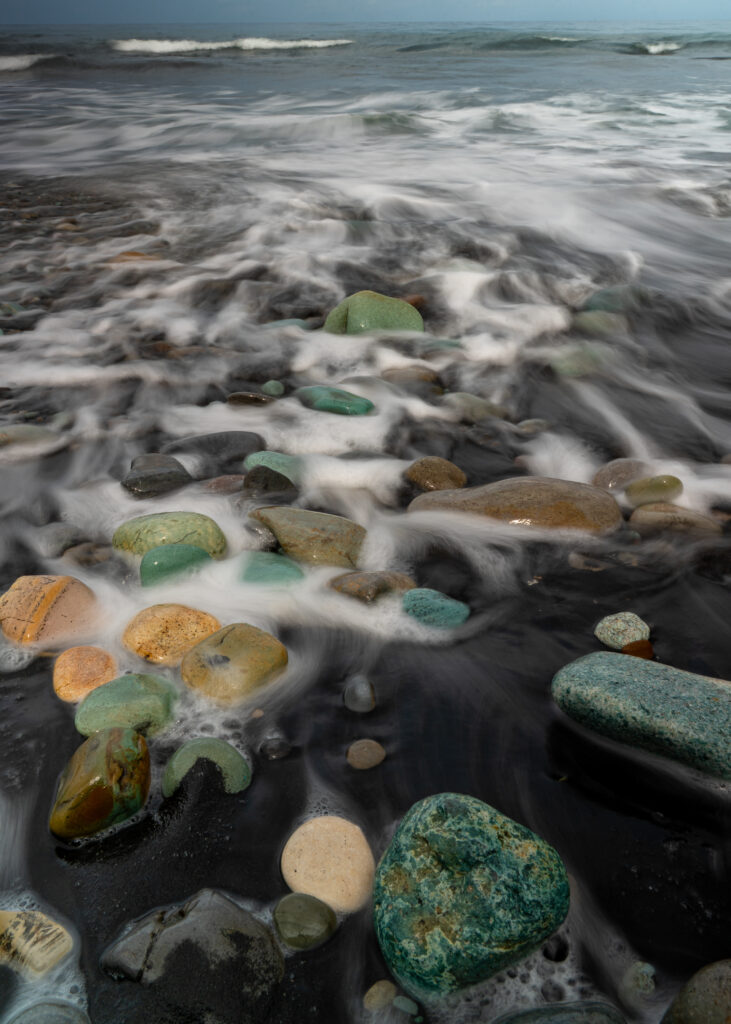
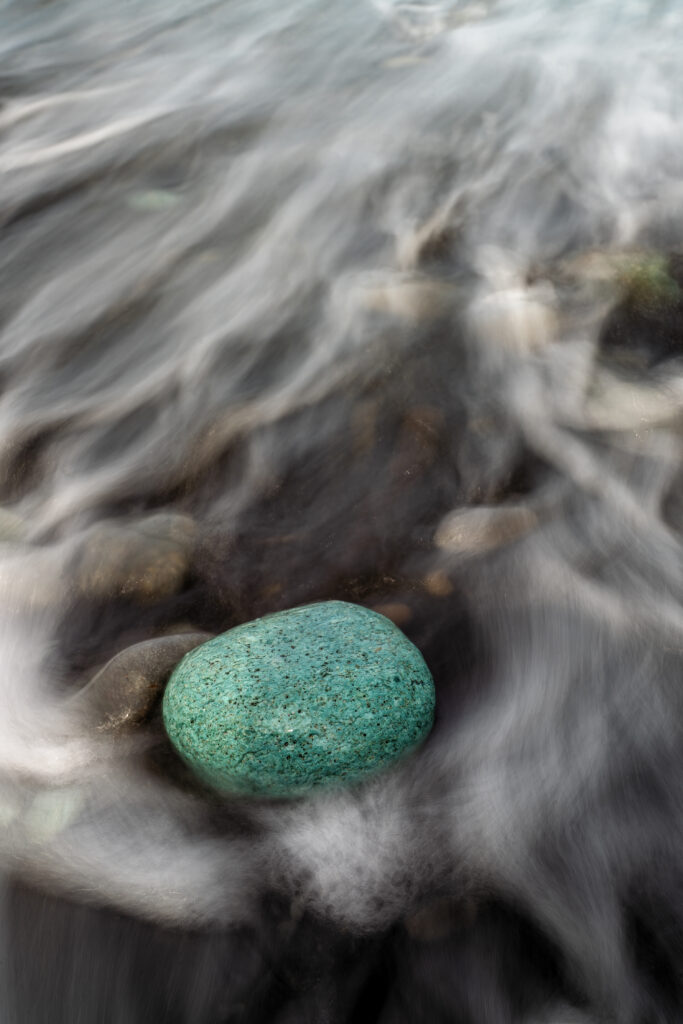
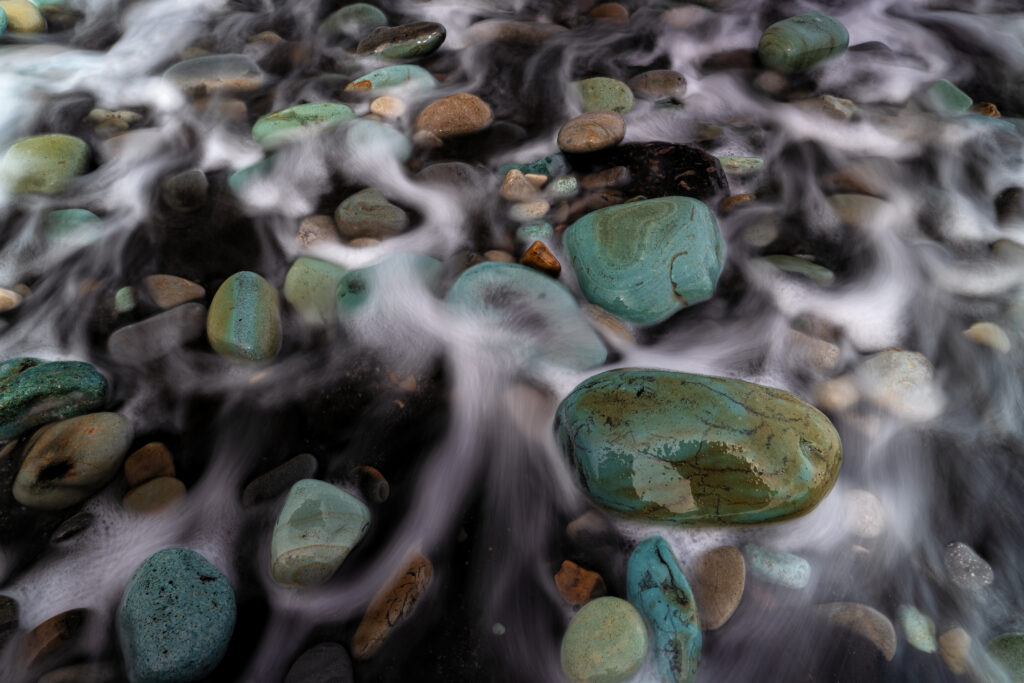
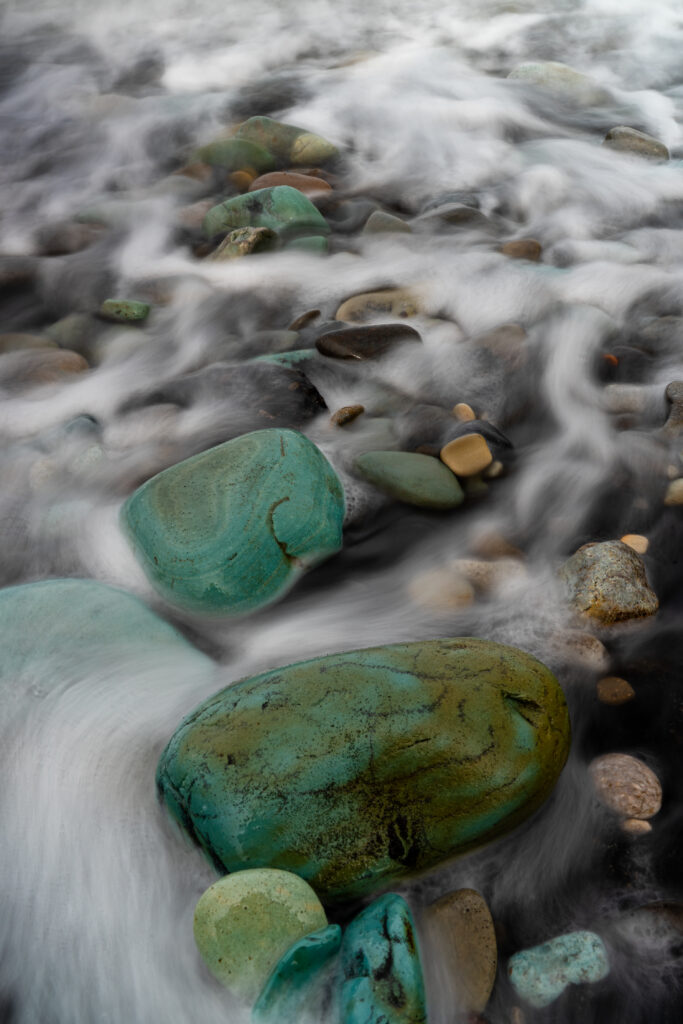
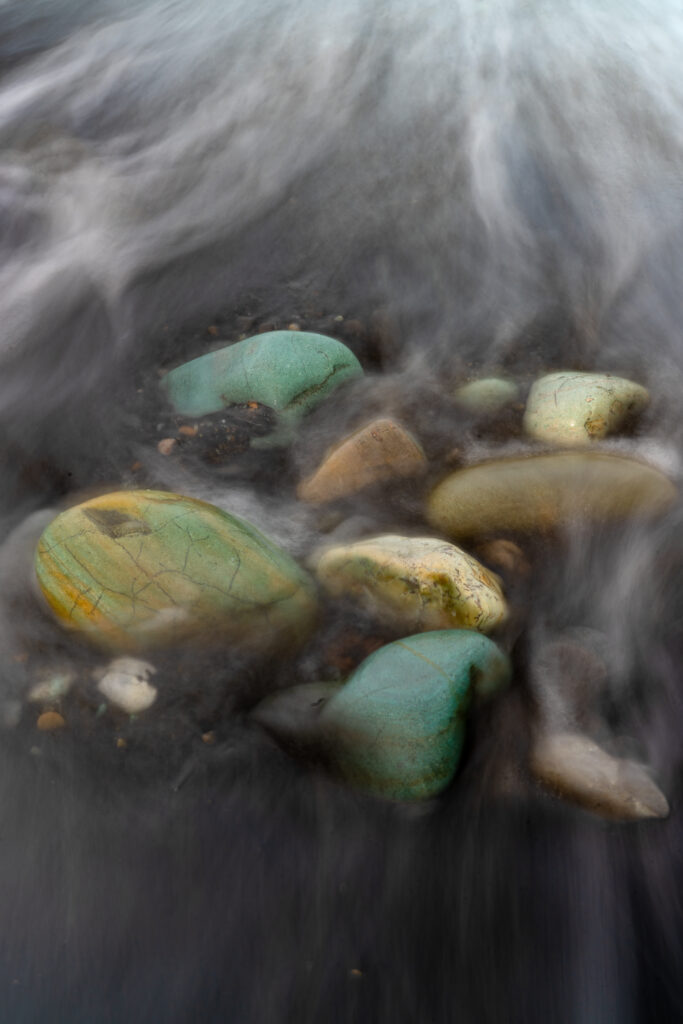
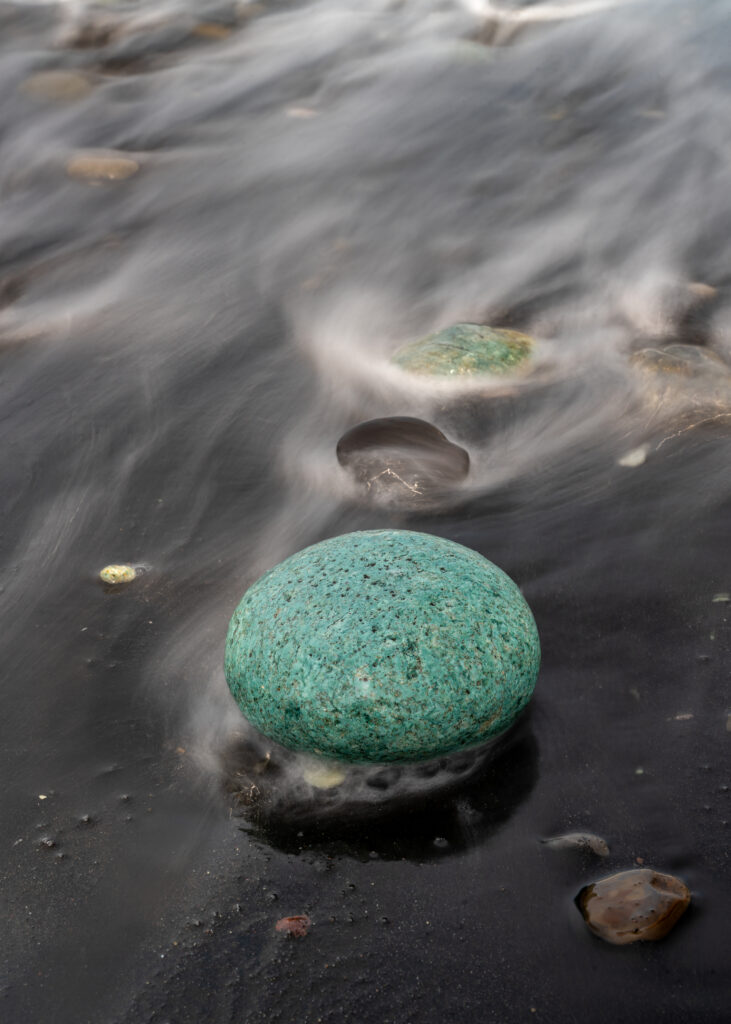
As many others have commented online, there are more blue rocks off the beach than on. Specifically, these stones are apparently all the (minor) rage amongst landscapers (especially on nearby Bali), so intrepid locals have taken to collecting and selling piles of them stacked quasi-neatly between the beach and coastal roadway. Rather unfortunate, at least for the visiting traveler. When we were there the tide was out so more stones were exposed on the beach than if we had been there at high tide. Dry the stones are lacklustre, but when wet they take a deep sheen. And about that blue color … I think of blue as cobalt, midnight, lapis, azure, cornflower, ultramarine, royal, sapphire, cerulean, etc., etc., etc. But here I saw more green than blue. Teal perhaps and maybe Pantone 320 Perhaps all the true-blue stones are now resting in hoity-toity hotel gardens in Bali?
Regardless, once on the beach I looked for classic beachy landscape / seascape shots with crashing waves, billowing clouds, towering volcanoes along the horizon and black sands (and blue stones) underfoot. There was little in the way of clouds in an otherwise dull sky, the waves meowed rather than roared in, and the volcanoes were too far off to do any towering. At least there was black sand and a smattering of nicely glistening multi-hues stones. I took a few wide-field shots with sand, sea, and sky, but this was a time when less was more. So, instead, I pointed the camera down, made sure it was secure as the tripod legs sunk into the sinking sands, and tried timing ~2 second exposures to catch the water foaming and blurring between the stones as the it rushed in or ebbed out. Because I didn’t have a neutral density filter with me I set the ISO as low as possible — 50 on my Sony a7IV — but never quite timed the shot properly. Then it dawned on me: one of the drive modes that I use all the time in my astrophotography is interval shooting. Once I set that to 2 seconds and made sure that the camera was safe and stable, I knew that I would be guaranteed at least a few dreamily flowing shots. I originally only processed two images but recently I found a few more that I deemed worthy.
When I photographed these I only had my normal 4 section Gitzo Traveler tripod and though it gets low I wanted to get even closer to sand and stones. So, after that trip I purchased a Sunwayfoto Mini and that little tripod always travels with me for those occasional down low and funky shots. A photographer can never too many tripods (and cameras, camera bags, filters, lenses, etc.).
BTW, being an amateur geologist I have spent way too long trying to ascertain what kind of rocks these greenish-blue stones are. I can find nothing online that definitively states even whether they are sedimentary or volcanic in origin. Some of them look decidedly granitic but many appear with banding that looks more sedimentary to my amateur eyes. Normally I try to remember to bring home a rock sample or two from far off places. Surprisingly I absconded with none from this beach. Their origin shall remain a mystery for now.
Words and Images Jeff Clay